Recyclebank is a neat site for learning more about caring for the environment and recycling. I was already doing quite a bit of recycling but I learned even more by watching VERY short animations and taking quizzes. And I get rewarded with points that can be used for saving money with coupons, discounts, gift cards and magazine subscriptions. If you'd like to join (free)here's a link you can use (please copy & paste, unfortunately Blogger's links haven't worked lately):
http://www.recyclebank.com/referafriend/?___store=us&bl=am9hbmNvbG9yaXN0QHlhaG9vLmNvbQ==&utm_campaign=Refer-a-friend&utm_medium=direct%20link&utm_source=H9853667&cm_mmc=Refer-a-friend-_-direct%20link-_-H9853667-_-referral
Friday, February 24, 2012
Wednesday, December 21, 2011
Stretching Christmas Dollars

It seems that no matter how one plans or budgets, Christmas costs a lot! I don’t do a lot of Christmas decorating but I always hang a wreath. Having worked several years in the floral industry with wreaths as my specialty (all year), I got spoiled with the wonderful materials available to me there. Long-leaved eucalyptus and pink pepper berries with orange kumquats are my favorite combination but alas, I no longer have an employee’s discount—even if I can find these specialties.
This year I decided to forgo the kumquats to save the three dollars (approx.),skip the eucalyptus and pink berries and go shopping in my “floral supply closet.” I found some picks of purple plastic berries and wired them with lotus pods I’ve had for ages and some loose orange blossoms. I keep all the wonderful package ribbons I receive—especially the French wire ones. This year I found some plum-colored French ribbon pieces that I added to an existing purple and gold bow. Did I learn to make bows in the industry? Until I thought my fingers would fall off!
I used to make my own greenery wreaths to save money—since I could. I’d buy a bunch of Christmas tree branches for about $4 and cut individual small branches, wire them together and attach them to a grapevine wreath form. A couple of years ago, I decided that I no longer enjoyed that process and bought a green wreath, adding my own touches. Now those have gone sky-high. Now I’m buying evergreen garland sold by the yard (sometimes a minimum yardage is required, so be wary) and attaching it to my grapevine form with ribbons and floral wire. Even the mixed variety I got this year (it turned out to cost more than the “plain”) cost half as much as a small wreath and I had some left over for a short garland by the door. The trade-off for making the wreath myself was spending several hours “creating” it. However, I think I’d rather spend those hours working in my cozy home than “fighting the crowds.”
Monday, November 14, 2011
Aggressive Shopping Not Needed
I was shocked, and then put off as I read the white stick-on letters on the door of a rural Goodwill store declaring that no employee can put things aside for shoppers nor can employees shop on the same day as they work and so on. They must really have a problem here, I thought; though it had nothing to do with me, I felt unwelcome. More recently, I encountered the same written rebuke on the front window of another Goodwill store—this time softened by a green and blue background but the “aggressive shopping is prohibited” warning still angrily rang out. Is this a sign of the times?
In two types of stores in the past two weeks when we’ve looked for a local newspaper to buy for the coupons, we were told that they were now being kept behind the counter—at a drugstore we were advised, “Let me know when you’re ready to check out and I’ll ring it up for you.” We couldn’t even touch it before committing to payment. Why? “People are taking the coupons out.”
I don’t know if the poor economy has made people that desperate or if it’s just old-fashioned greed bred by “super-couponing” shows on TV. Either way, taking coupons from a newspaper without purchasing it is shop-lifting; it’s theft. In such difficult times, we need to work together—not steal from each other.
Jesus has promised those who follow him will have their basic needs taken care of by his Father if they seek his kingdom and righteousness first rather than building their own kingdom (Matthew 6:25-34). Yes, we need to do what we are able and one of God’s main sources for provision for those in need is his people but ultimately, God himself is our provision and such acts of “desperation” aren’t needed when we turn to him.
In two types of stores in the past two weeks when we’ve looked for a local newspaper to buy for the coupons, we were told that they were now being kept behind the counter—at a drugstore we were advised, “Let me know when you’re ready to check out and I’ll ring it up for you.” We couldn’t even touch it before committing to payment. Why? “People are taking the coupons out.”
I don’t know if the poor economy has made people that desperate or if it’s just old-fashioned greed bred by “super-couponing” shows on TV. Either way, taking coupons from a newspaper without purchasing it is shop-lifting; it’s theft. In such difficult times, we need to work together—not steal from each other.
Jesus has promised those who follow him will have their basic needs taken care of by his Father if they seek his kingdom and righteousness first rather than building their own kingdom (Matthew 6:25-34). Yes, we need to do what we are able and one of God’s main sources for provision for those in need is his people but ultimately, God himself is our provision and such acts of “desperation” aren’t needed when we turn to him.
Tuesday, October 25, 2011
Let Them Eat Rice & Beans!
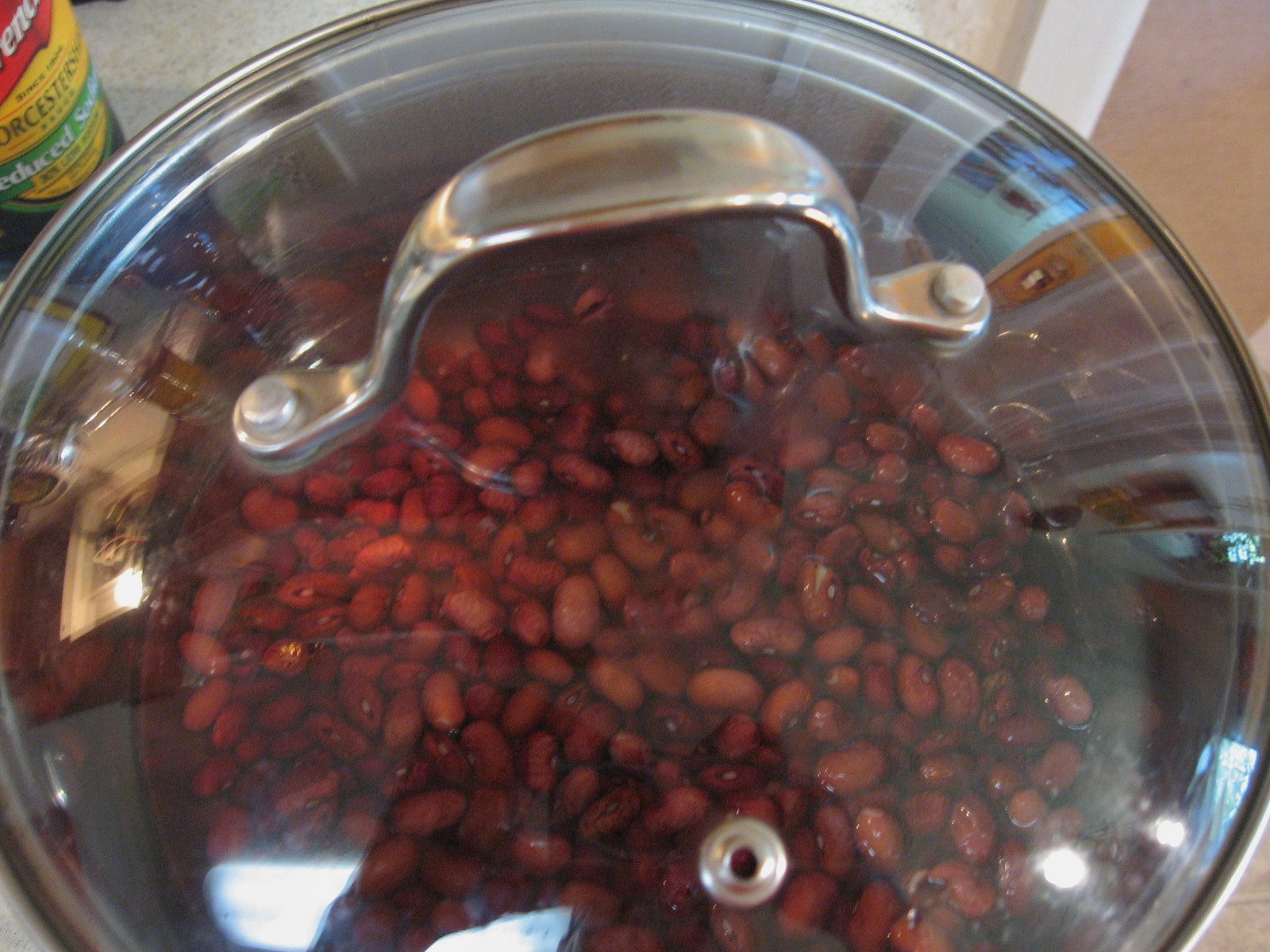
Sooner or later in our lean times someone tells us, “Well, you just have to eat rice and beans.” Um, we’ve been eating rice and beans for a loooong time now; we never stopped eating them.
Last week our local grocery had a sale on dried beans so I bought some black beans to vary our weekly pot of white bean and vegetable soup. When we got home, I realized that they weren’t black beans but red and I already had a superabundance of red beans. No problem, we were looking for an addition to our menu; we’ll have Red Beans & Rice—my husband is an ace with seasonings. This is a week for using “what we’ve got”.
Dried beans are very inexpensive for the volume of food they make—a bag typically costs $1.29—on sale .99 and can make several meals. The catch is that they have to be soaked “overnight”—I put them in water mid-morning and begin cooking them around 4pm. It’s important to wash and sort them first—the bag instructions make sure that I know that the beans “are a farm product”, which means that there could be rotten ones or even rocks in the mix. They also have to be cooked about two hours, which can pad the energy bill. Perhaps if I soaked them longer they could cook less.
For these reasons I generally discourage people for sending dried beans to food banks; the amount of planning and preparation cooking dried beans takes is often more than a severely discouraged person can manage. But if you’re looking to stretch what you’ve got—they cost still less than a comparable number of cans of beans and have less sodium.
Friday, October 21, 2011
Coupons?
I’ve always been happy to use coupons when they fit products that we normally use—especially when stores double or triple them! However, coupons are offered by the manufacturer as a marketing tool to get you to buy their product—whether you need it or not. If it’s not something you and your family would use or can afford, a coupon will generally not be a good deal.
Sometimes I clip coupons that I might use if the need arises or the sale is good enough but I have to make sure my husband understands this when he shops while I’m away. In his rationale, I wouldn’t have the coupon if I didn’t intend to use it but I’m just continuing in the tradition of Girl Scouts—being prepared. Now that printable digital coupons are available, I’m a lot less likely to print them unless I know that I’ll use them since ink and paper cost me money. However, I’ve never had a store turn down my printable coupons because I’ve used the least expensive “draft” and “black & white” settings on my printer or paper that has something else printed on the back.
I’ve been excitedly reading library books about “super-couponing” but after spending hours upon hours hunting and scrolling online, I’ve netted only a few coupons I could use. Many manufacturers want to know practically everything about you before they will give you a one-time “sign-up” coupon; I’m not sure it’s worth it. However, I’ve discovered (through the books) a site that will send a link to the coupons—all in one place, to my inbox: http://www.couponmom.com
My current thinking is that I might do better with the coupons in the Sunday paper—if we can remember to buy one. Trading coupons you don’t want with friends and family can even out the cost of the paper. Remember to look for them in the pages of the paper too—not just in the inserts.
Please let me know about your experiences in couponing. I’ve made the comment process as simple as possible.
Sometimes I clip coupons that I might use if the need arises or the sale is good enough but I have to make sure my husband understands this when he shops while I’m away. In his rationale, I wouldn’t have the coupon if I didn’t intend to use it but I’m just continuing in the tradition of Girl Scouts—being prepared. Now that printable digital coupons are available, I’m a lot less likely to print them unless I know that I’ll use them since ink and paper cost me money. However, I’ve never had a store turn down my printable coupons because I’ve used the least expensive “draft” and “black & white” settings on my printer or paper that has something else printed on the back.
I’ve been excitedly reading library books about “super-couponing” but after spending hours upon hours hunting and scrolling online, I’ve netted only a few coupons I could use. Many manufacturers want to know practically everything about you before they will give you a one-time “sign-up” coupon; I’m not sure it’s worth it. However, I’ve discovered (through the books) a site that will send a link to the coupons—all in one place, to my inbox: http://www.couponmom.com
My current thinking is that I might do better with the coupons in the Sunday paper—if we can remember to buy one. Trading coupons you don’t want with friends and family can even out the cost of the paper. Remember to look for them in the pages of the paper too—not just in the inserts.
Please let me know about your experiences in couponing. I’ve made the comment process as simple as possible.
Thursday, January 20, 2011
BOGOs
When your grocery store runs BOGO (Buy One Get One--free) specials it can be a good way to stock up or buy ahead, getting two for the price of one. But if you don’t need the extra one, you can give it to someone who does. Or if you really need the cut rate but not the extra—you may be able to get just one item for half price.
Rain Checks
If everyone else gets to the store’s really good deal before you do, persevere and ask at the customer service desk for a rain check so you can still get the sale price when they restock. It’s helpful to know the product name, size and sale price—while not necessary, it speeds the process. Rain checks are usually good for 30 days.
Thursday, May 6, 2010
Stick Together
Financial strain is a leading cause of divorce. The irony is that divorce costs so much money that it only makes finances worse—much worse. In 2007, it was reported that the costs of a divorce in the U.S. ran from $10,000-$20,000 (If you have that kind of money to throw around I can think of some better ways to use it!)
Then there is the expense of two residences—two of everything. If you have children there’s the expense of child support, which many of the people who are ordered to pay, consider to be far out of proportion to their income. Those who are designated to receive it—often don’t and end up having to pay the costs on their own. Alimony may be another expense of divorce in your state.
Difficult times are the times to stick together as husband and wife. Be patient with each other. Listen. Remember what drew you together in the first place. I’ve heard marriage teachers say that if you can persevere; your marriage will get better sooner than you think (they say that statistics bear it out). But it does take a conscious choice.
I’m in no way an expert on this subject but I do know that divorce costs money in addition to tremendous pain. I do, however, know how to stay married through difficult times as my husband and I are on our thirty-second year of marriage.
Then there is the expense of two residences—two of everything. If you have children there’s the expense of child support, which many of the people who are ordered to pay, consider to be far out of proportion to their income. Those who are designated to receive it—often don’t and end up having to pay the costs on their own. Alimony may be another expense of divorce in your state.
Difficult times are the times to stick together as husband and wife. Be patient with each other. Listen. Remember what drew you together in the first place. I’ve heard marriage teachers say that if you can persevere; your marriage will get better sooner than you think (they say that statistics bear it out). But it does take a conscious choice.
I’m in no way an expert on this subject but I do know that divorce costs money in addition to tremendous pain. I do, however, know how to stay married through difficult times as my husband and I are on our thirty-second year of marriage.
Tuesday, May 4, 2010
From the Farm

This is a great time to save money on fruit and vegetables at your local produce stand or farmers’ market. Not only are you supporting what are usually local “Mom & Pop” businesses but you’ll find a considerable savings over the grocery store prices—sometimes as much as a dollar a pound! You’ll also find a greater variety, which can include shell beans (I especially like the magenta mottled “October beans”) and heirloom tomatoes (though they tend to be a good bit more expensive, I hear they taste delicious). Community abounds in such settings, you never know who you’ll see from “way back when” and they can be very international. Sometimes you can even find home baked bread or flowers there. Take along your cloth or reusable plastic shopping bags and help them keep their prices down.
mixed media painting "Terrific Turnips" by Joan C. Thomson (c)
Save the Electric & Save the Dollars
A little planning and patience can go a long way in electricity and natural gas savings.
•Run your dishwasher only when it’s full
•Refrigerators run more efficiently when full & when opened as little as possible
•Use lids on cooking pots so the heat doesn’t escape—the food will take less fuel to cook it and you won’t get as hot!
•Keep closets closed (unless you’re airing them out). Remember when you’re mother told you that your family couldn’t afford to “air condition the great outdoors”? the same applies to your inner closets.
•And speaking of the “great outdoors”, what your mother said is true (see above). When you open outer doors, be brief.
•Run your dishwasher only when it’s full
•Refrigerators run more efficiently when full & when opened as little as possible
•Use lids on cooking pots so the heat doesn’t escape—the food will take less fuel to cook it and you won’t get as hot!
•Keep closets closed (unless you’re airing them out). Remember when you’re mother told you that your family couldn’t afford to “air condition the great outdoors”? the same applies to your inner closets.
•And speaking of the “great outdoors”, what your mother said is true (see above). When you open outer doors, be brief.
Thursday, April 29, 2010
Drop the Shop
I used to love shopping, it didn’t matter whether it was inside the store or window shopping, I loved the excitement of seeing nicely arranged, new and colorful things. Now I’ve learned that if I stay out of the stores—unless I need something, I’m less likely to decide that I must buy some “wonderful” thing. And then the something that goes with that thing…things I often didn’t even know existed until I saw them!
Sometimes however, shopping is useful in order to know who has what, so you’ll know where to look when a need arises. Okay, so I still enjoy shopping but more often than not, when I get home I appreciate what I already have all the more. The key is being disciplined and purposeful in your shopping, knowing what you truly need and can truly afford.
Sometimes however, shopping is useful in order to know who has what, so you’ll know where to look when a need arises. Okay, so I still enjoy shopping but more often than not, when I get home I appreciate what I already have all the more. The key is being disciplined and purposeful in your shopping, knowing what you truly need and can truly afford.
Tuesday, April 27, 2010
Respectable Discounts
If someone in your household is eligible for a senior discount, make the most of it. Though the qualifying age for senior discounts varies—and continually changes, many businesses and organizations offer them. Banks offer free checking, grocery stores—especially natural food stores, and thrift stores offer percentage discounts on certain days while restaurants often offer “early bird specials” for seniors in the late afternoon. If a policy isn’t posted, it doesn’t hurt to ask—if a business doesn’t offer a senior discount perhaps they will if enough people ask (sometimes one or two inquiries is all it takes for a new policy to be written—depending on the size of the business). Even the U.S. National Parks Service offers a special deal for those 62 and over and those in their car. http://www.us-parks.com/golden-age-passport.html
Cable Cuts
I’ve often read that a way to save money is to cancel your cable TV service. I haven’t tried this one since we’ve never subscribed to this obvious financial drain and don’t plan to. Of course, canceling your contract may cost too much so it may be best to wait until it’s finished—unless after you do the math you find that you would still come out ahead. (Some may live in areas that don’t receive TV reception any other way. Then the question is, “Do you need to eat, pay your bills—fill in the blank more than you “need” TV?)
Thursday, April 22, 2010
Till the Last Drop
*Cut open empty bags of sugar or flour and in the folds you’ll find as much as a quarter cup more of sugar or flour!
*Discount stores sell plastic “keys” to roll your toothpaste (and other products) tubes flat so you can get the most out of them. However, they only roll as far as the “shoulders” of the tube; a pair of pliers works nicely to squeeze out two or three more brushes full. Then if you really want to get the most out of your tube, cut it open with some clean scissors and scrape the insides with a rubber spatula. This probably works best on plastic tubes; I haven’t tried the metal ones.
*Turning cartons of milk or juice (oil bottles too) upside down for a few minutes with the lid on can loosen a teaspoon or more from the sides of the carton.
*Discount stores sell plastic “keys” to roll your toothpaste (and other products) tubes flat so you can get the most out of them. However, they only roll as far as the “shoulders” of the tube; a pair of pliers works nicely to squeeze out two or three more brushes full. Then if you really want to get the most out of your tube, cut it open with some clean scissors and scrape the insides with a rubber spatula. This probably works best on plastic tubes; I haven’t tried the metal ones.
*Turning cartons of milk or juice (oil bottles too) upside down for a few minutes with the lid on can loosen a teaspoon or more from the sides of the carton.
Clean Clothes Warm Heart
Know someone going through financial strain, who doesn’t have a washer and dryer? Invite them over from time to time to wash & dry a couple of loads in your machines. It could save them as much as $15 and it’s a great way to get to know each other better.
Cash Flow
Sales and discounts give great opportunities for “stocking up” but during lean times it can be more important to keep your “cash flow”. It’s a good idea to only buy one (or two if it’s something you’ll need right away such as a food item) of the sale item until you know that your bills can be met along with any unexpected expenses.
Tuesday, April 20, 2010
Obvious or New
Many of the ideas I’m writing may be very obvious to some who have been at resource-stretching for a long time. Yet, I’m including everything I can think of just in case someone hasn’t heard; I learned long ago that not everyone has the same framework of learning or experience. Some of the practices will seem too small to make a difference but they can add up more quickly than you think. Most are things I’ve tried myself—maybe I read it somewhere but I’ve made them part of my life and now I want to share them with you. Even if you have plenty of money/resources, you may want to try some of these things for your health, the health of God’s creation and to free up resources to help others.
Personal H2O
Personal plastic bottles of water bought in multiples not only add up in cost but apparently put us at risk from leaching BPAs. Replace your plastic habit by purchasing stainless steel water bottles almost anywhere (as low as $4.99 each)and fill them with your own filtered water—better for you and better for the environment. Most must be hand-washed and not put in the dishwasher. We tried the BPA-free plastic bottles but they leaked, broke and melted; they were much more expensive than the stainless steel for their size.
Calling Home
If you still have a “land line”, a pre-paid phone card can make costly monthly charges for a long distance service unnecessary. Stores such as Walgreens and Wal-Mart sell the cards in increments of $10, $20 and up, with more minutes—and a better per minute rate for more money (i.e. a $30 card will have more and cheaper minutes than a $10 card). You buy what you need (within those amounts) and use it when you need it (though they often expire in a year but can be added to). Unlike monthly rate services, they’re portable so you can use them at someone else’s house or on the road (the rate per minute is higher on pay phone calls, which means your minutes are used faster).
Thursday, April 15, 2010
Coupons?
Use coupons wherever you can—for groceries, restaurants, even car & home repair, but don’t let them entice you into buying something you wouldn’t normally buy. The same goes for “sales”—if you can’t use it, don’t truly have the money for it or it will cost you more for extra components or space to house it—it’s not a bargain!
Subscribe to:
Posts (Atom)